

Blog Detail

Pipe cutting includes tube blank severing, wall cutting, slotting, and machining various intersecting lines at the ends of pipe structures. Selecting a suitable laser tube cutting machine is critical for ensuring processing efficiency, quality, and cost control. Below, we explain the selection logic from three core dimensions.
1. Select by Processing Capacity: Match Pipe Size and Process Requirements
Processing capacity is the foundation of equipment selection, determined mainly by the machinable pipe diameter, wall thickness, and process complexity.
· Choose Chucks by Pipe Diameter: The chuck is the core component defining the machinable pipe diameter. Mainstream specifications include 120mm, 240mm, 360mm, and larger diameters. For small-batch, small-diameter (≤120mm) processing, a 120mm chuck model suffices; for medium-batch, medium-diameter (120–240mm) processing, prioritize a 240mm chuck; for large-batch, large-diameter (240–360mm) or thick-walled pipes, 360mm+ chucks are required to guarantee clamping stability and cutting precision.
· Determine Capacity by Process: Basic models meet simple cutting and drilling needs. For complex slotting, intersecting line machining, bevel cutting, etc., select equipment supporting multi-axis linkage and dedicated cutting heads to ensure one-step forming of complex processes.
2. Select by Automation Level: Adapt to Production Scale and Efficiency Requirements
Automation directly impacts labor costs, production efficiency, and capacity limits. It should be determined based on daily processing volume, pipe length, and weight.
· Manual Feeding Laser Tube Cutters: Ideal for small-batch, multi-variety, short-pipe processing. No complex loading systems are needed; low investment, flexible operation, suitable for sample production or scattered orders.
· Semi-Automatic Laser Tube Cutters: Equipped with simple loading devices for automatic single-pipe feeding and cutting, with manual assistance for loading/unloading. Suitable for medium-batch, medium-length pipe processing, balancing efficiency and cost.
· Fully Automatic Laser Tube Cutters: Support integrated automatic loading, feeding, cutting, and unloading of bundled pipes. Adapt to large-batch, long pipes (6–9m), and heavy pipes. Greatly reduce manual intervention, improve continuous production efficiency, and are suitable for large-scale manufacturing enterprises.
3. Select by Material Properties: Match Material and Cutting Performance
Different pipe materials (carbon steel, stainless steel, aluminum alloy, copper, etc.) have distinct requirements for laser power and beam quality, requiring precise matching.
· Carbon Steel/Stainless Steel: Mainstream metal pipes, highly compatible with fiber lasers. Choose 1500–3000W for thin-walled pipes, 3000–6000W for medium-thick walls, and 6000W+ for thick walls (>20mm) to ensure cutting speed and section quality.
· Aluminum Alloy/Copper: Highly reflective materials requiring fiber lasers with stable beam quality and anti-reflection capabilities. Prioritize 3000W+ power with dedicated cutting heads to avoid reflective damage and improve cutting stability.
Selection Summary
Final selection integrates three dimensions: First, confirm pipe diameter, wall thickness, and cutting processes to lock in processing capacity; second, match daily processing volume, pipe length/weight to choose automation level; finally, align with pipe material to confirm laser power and core configuration. Jinan Starcreate Laser provides customized laser tube cutting solutions based on your actual needs, enabling efficient and precise processing.
Related Blogs
-
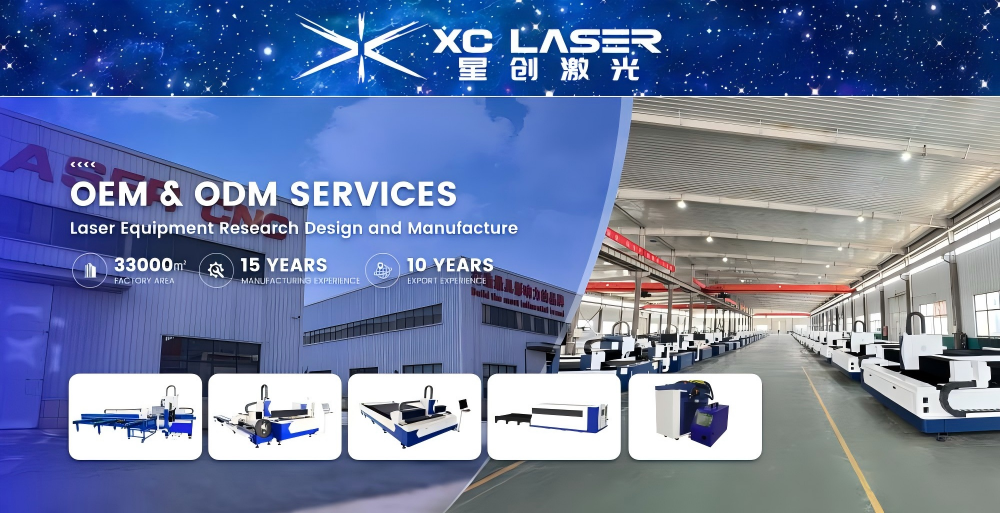 Welcome to Jinnan Xing Chuang Laser Equipment Co.,Ltd / XC - Laser .
 -
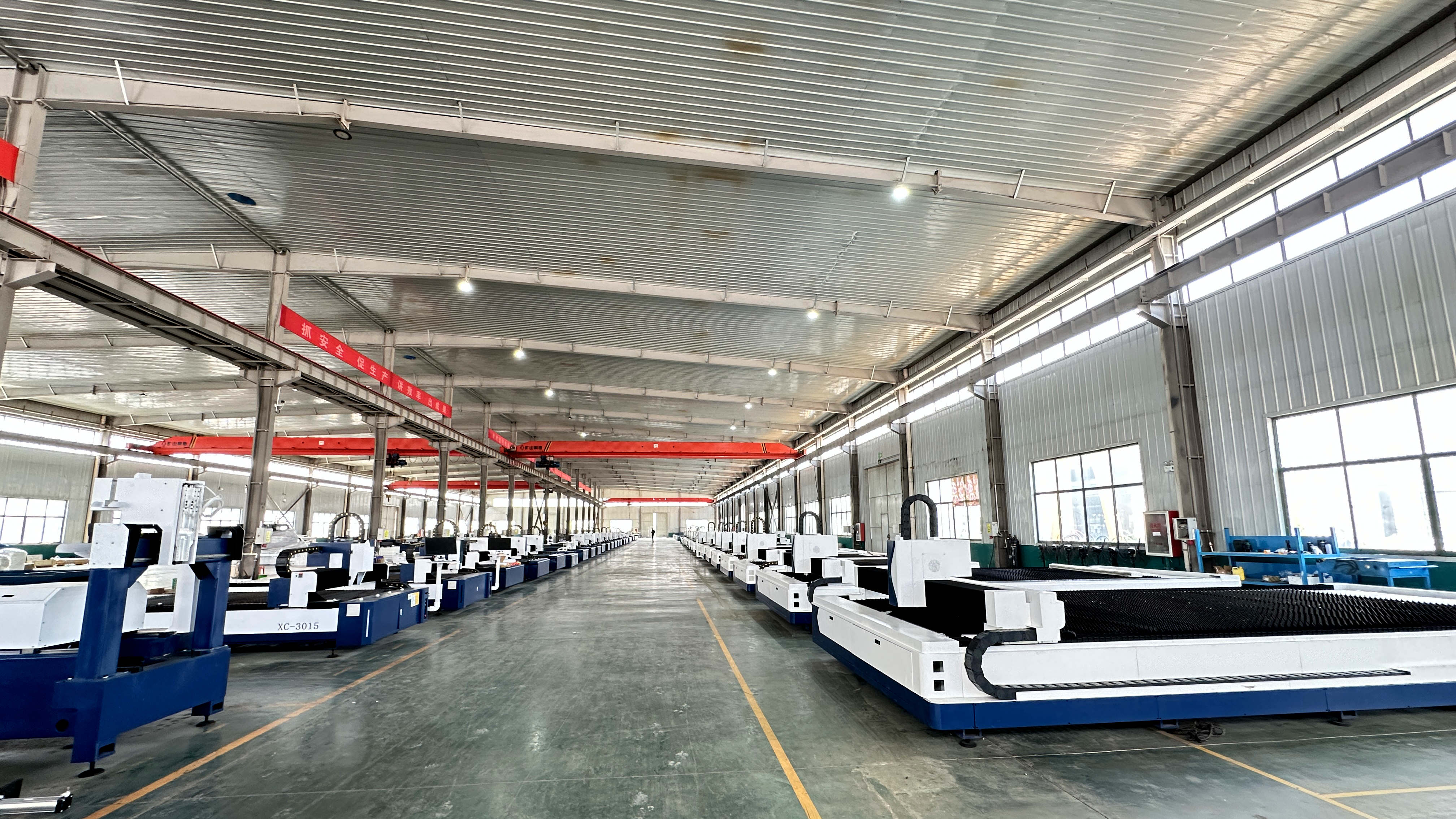 Real Photo of Our Laser Cutting Machine Workshop
 -
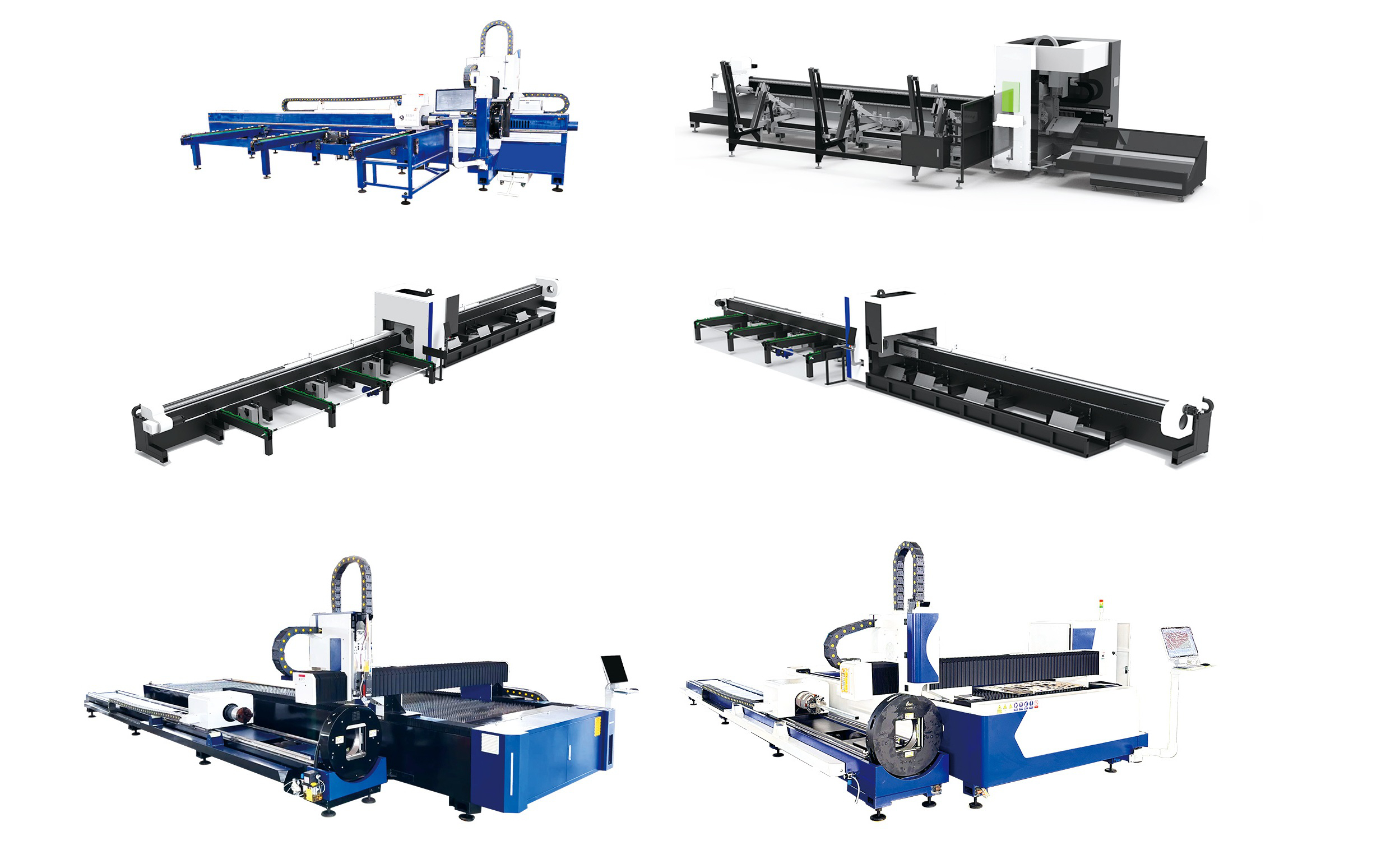 2 Chucks Tube Cutting Machine , 3 Chucks Tube Cutting Machine , Tube And Plate Integrated Laser Cutting Machine
 -
 Laser cutting machines are widely used in various industries such as metal processing, sheet metal manufacturing, and precision engineering, and their stable operation relies heavily on high-quality consumables. These consumables, though small in size, directly affect the cutting accuracy, efficienc


