

Blog Detail

In the modern industrial chain, pipes are indispensable basic components, widely used in construction, automotive manufacturing, aerospace, petrochemical, medical equipment, and many other fields. The processing quality and efficiency of pipes directly affect the performance, safety and production cost of end products. With the continuous upgrading of industrial production requirements, traditional pipe cutting methods such as sawing, flame cutting and plasma cutting have gradually exposed their limitations, such as low precision, rough cutting surface, low material utilization rate and long processing cycle. Against this background, the laser pipe cutting machine, as a high-tech processing equipment integrating laser technology, numerical control technology and precision machinery, has become a core force promoting the transformation and upgrading of the pipe processing industry. Essentially, a laser pipe cutting machine is a specialized industrial equipment designed for cutting various metal and non-metal pipes, which uses a high-energy laser beam as the cutting medium. Generated by a laser generator, transmitted through an optical system and focused into an ultra-fine high-energy density spot, the laser beam can instantly melt or vaporize pipe materials, and the molten or vaporized material is blown away by auxiliary gas to form a smooth cutting surface. Unlike traditional cutting tools, it achieves non-contact, high-precision and efficient cutting without causing tool wear or pipe deformation.
The stable and efficient operation of a laser pipe cutting machine relies on the close cooperation of several core components. As the "heart" of the equipment, the laser generator (mainly fiber laser generators in the current industry) provides high-energy laser beams with high electro-optical conversion efficiency and stable output. The optical transmission system, composed of optical fibers, reflectors and focusing lenses, transmits and focuses the laser beam to ensure cutting precision. The pipe clamping and positioning mechanism fixes the pipe to prevent displacement, adapting to pipes of different diameters and shapes with high clamping precision. The numerical control system, as the "brain", controls all processing parameters in real time, supporting automatic and batch cutting of complex shapes. In addition, the auxiliary gas system provides suitable gas for different materials to ensure cutting effect. Compared with traditional cutting methods, laser pipe cutting machines have obvious advantages: high cutting precision (error within ±0.05mm) without secondary processing, high efficiency 3-5 times that of traditional methods, strong versatility for various materials and pipe types, high material utilization rate to reduce waste, and green environmental protection without pollution.
With its excellent performance, laser pipe cutting machines have been widely used in various industries. In the construction industry, they are used for cutting pipes in building structures, railings and curtain walls to ensure structural precision. In automotive manufacturing, they process auto parts such as exhaust pipes and frame pipes that require high precision and complex shapes. In the aerospace industry, they cut high-precision pipes of aircraft components made of special materials like titanium alloy. In the petrochemical industry, they cut corrosion-resistant and high-strength pipeline materials for oil and gas transmission. In the medical equipment industry, they process ultra-precise pipes for medical instruments with clean cutting surfaces, meeting strict industry requirements. These wide applications fully demonstrate the practical value of laser pipe cutting machines in modern industrial production.
With the continuous development of laser technology, numerical control technology and artificial intelligence technology, laser pipe cutting machines are moving towards intelligence, high power, high precision and integration. In the future, more intelligent functions such as automatic pipe loading and unloading, online detection and AI path optimization will be integrated to improve efficiency and reduce labor costs. The development of high-power laser generators will also expand their cutting range to handle thicker and harder pipe materials. In conclusion, as a revolutionary processing tool, the laser pipe cutting machine has broken the bottleneck of traditional pipe processing, promoted the industry's transformation towards precision, efficiency and greenization, and will play a more important role in the global industrial chain with the advancement of technology.
If you want to know more about our machines or need any help , please send email to sales@xc-laser.com
XC-Laser . Mr. Tom Song
Related Blogs
-
 Welcome to Jinnan Xing Chuang Laser Equipment Co.,Ltd / XC - Laser .
 -
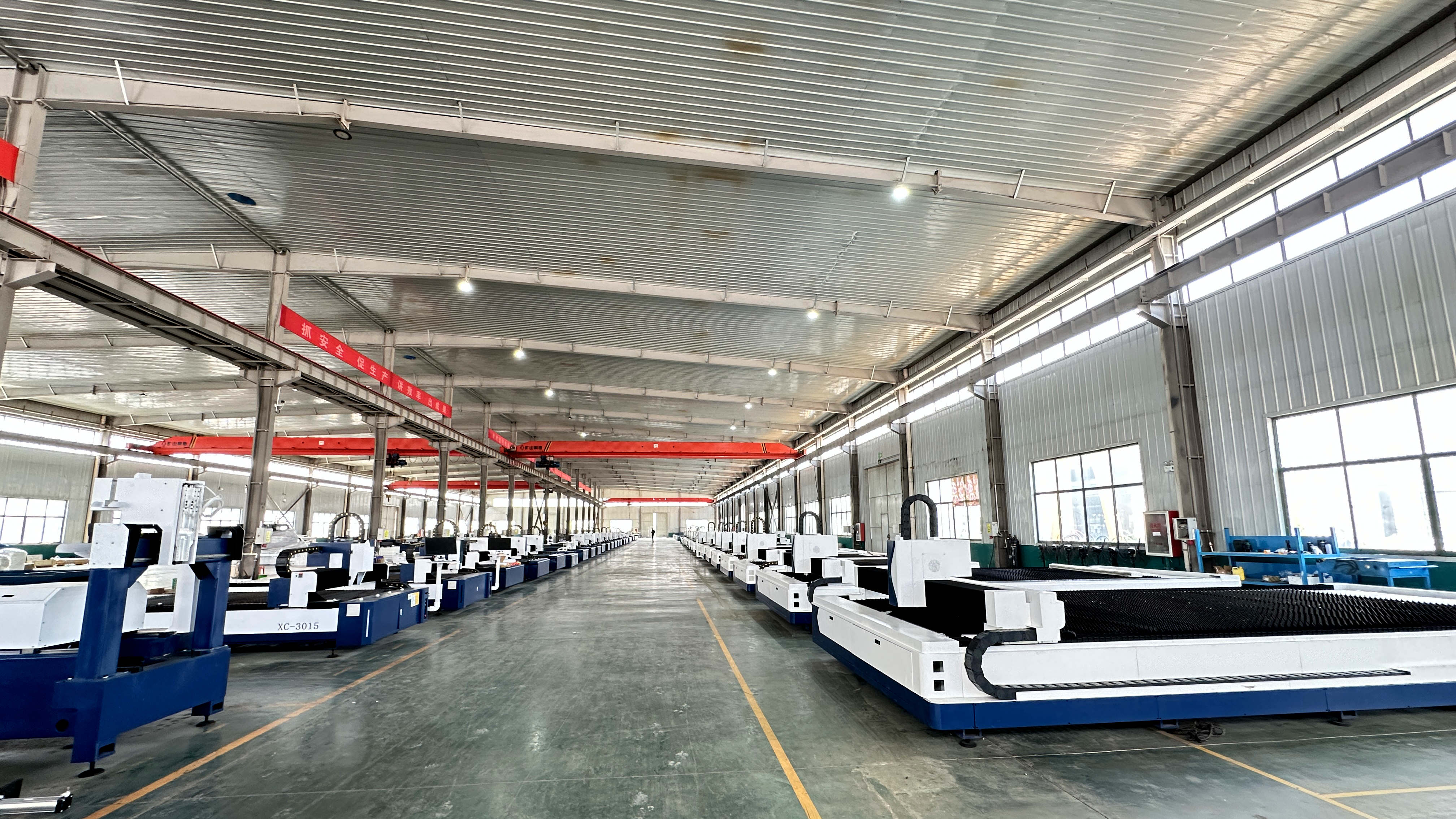 Real Photo of Our Laser Cutting Machine Workshop
 -
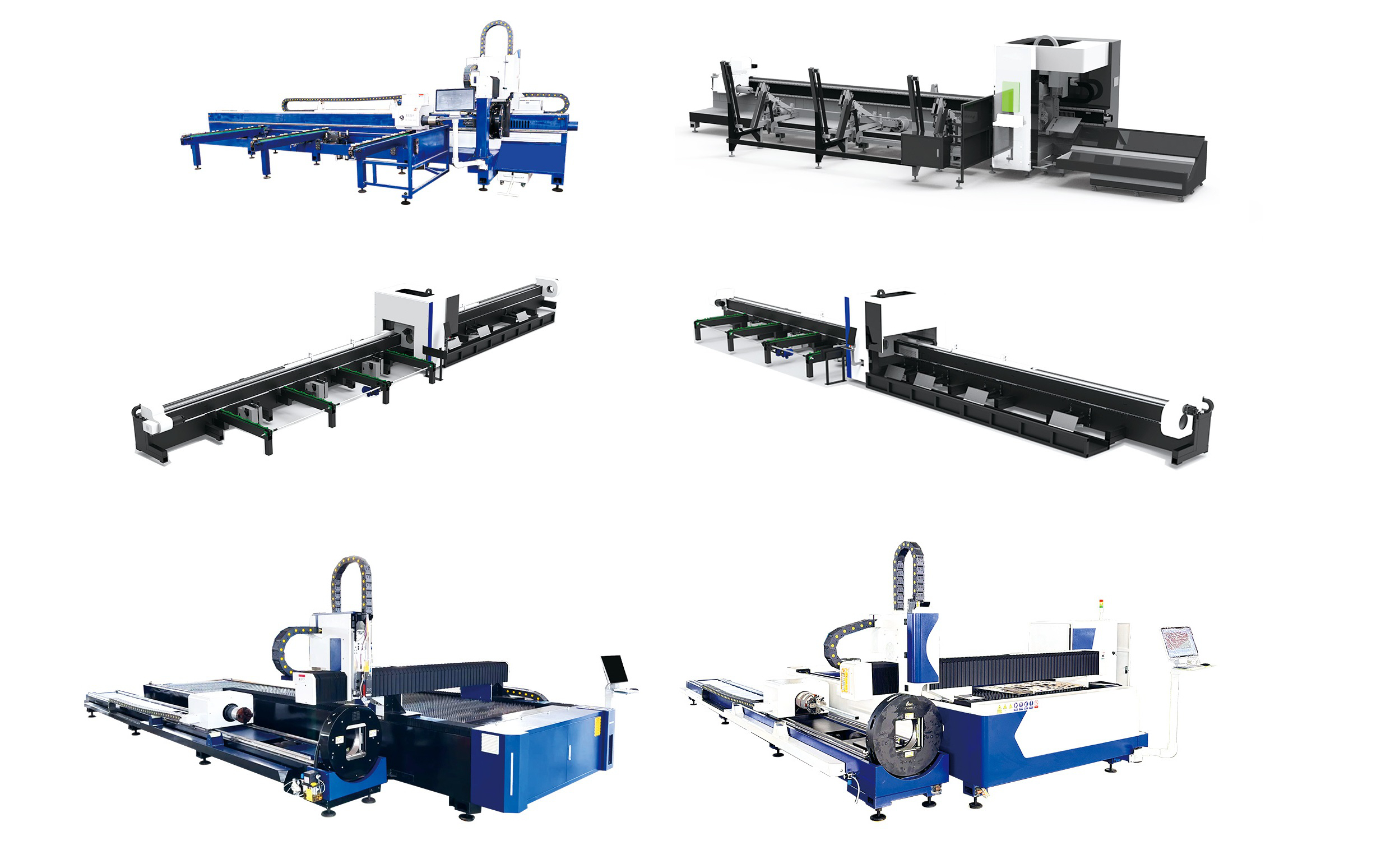 2 Chucks Tube Cutting Machine , 3 Chucks Tube Cutting Machine , Tube And Plate Integrated Laser Cutting Machine
 -
 Laser cutting machines are widely used in various industries such as metal processing, sheet metal manufacturing, and precision engineering, and their stable operation relies heavily on high-quality consumables. These consumables, though small in size, directly affect the cutting accuracy, efficienc


