

Blog Detail

Introduction
Laser cleaning technology has evolved from a specialized laboratory technique to a mainstream industrial process, driven by continuous advancements in high-energy photonics and precision motion control. At its essence, this non-contact surface treatment method utilizes the photothermal, photochemical, and mechanical effects of laser radiation to selectively remove contaminants—such as rust, oxidation, coatings, and oil residues—from material substrates. Unlike mechanical abrasion or chemical stripping, laser cleaning offers unparalleled precision through controlled energy deposition. This technical overview examines the fundamental physical mechanisms, critical system components, parameter optimization strategies, and advanced beam delivery technologies that underpin the performance and versatility of modern laser cleaning systems across aerospace, automotive, and precision manufacturing sectors.
Core Physical Mechanisms and Interaction Dynamics
The efficacy of laser cleaning is governed by the complex interaction between laser beams and target materials, governed by three primary, often concurrent, mechanisms. The photothermal effect dominates in most industrial applications: contaminants absorb laser energy, causing instantaneous heating to their vaporization or ablation temperature (often hundreds of degrees Celsius in microseconds), leading to phase transition and explosive ejection. In contrast, the photochemical effect relies on high-photon-energy lasers to break molecular bonds of organic contaminants, causing them to dissociate into volatile gases without significant heating of the substrate. The mechanical effect (or "shock wave" effect) occurs when the rapid expansion of ablated material generates a localized shockwave, dislodging adherent particles. The success of the process hinges on the selectivity ratio—the differential absorption rate between the contaminant and the base material. For instance, metals typically have high reflectivity in the near-infrared spectrum, making fiber lasers (1064nm-1070nm) ideal for removing organic coatings from steel, as the coating absorbs the energy while the metal reflects most of it, thus avoiding thermal damage.
System Architecture: Key Components and Technical Specifications
A high-performance laser cleaning system is an integration of precision opto-mechatronic components, each with stringent technical requirements. The laser source is the heart of the system. Fiber lasers are the industry standard, with parameters including average power (ranging from 50W for delicate electronics to 1000W+ for heavy industrial rust removal), pulse width (nanosecond or picosecond regimes), and beam quality (M²). A low M² value (typically <1.2) ensures a diffraction-limited, focused spot for maximum energy density. The beam delivery and focusing system comprises galvanometric scanners (galvo scanners) and large-format telecentric lenses. Galvo scanners enable high-speed, programmable beam deflection (up to 10,000 mm/s), while telecentric lenses ensure the beam is perpendicular to the workpiece surface over the entire field of view, maintaining uniform energy density across the working area. The motion control platform synchronizes the laser scanning with the linear or robotic movement of the workpiece, achieving scan fields up to 300mm x 300mm or larger. Finally, the chiller and dust extraction unit maintain thermal stability of the laser cavity and collect ablated particulate matter to prevent re-deposition.
Parameter Optimization and Process Control
Optimizing laser cleaning parameters is a precise science that balances cleaning efficiency with substrate integrity. The primary variables are laser power, scanning speed (F-theta lens speed), frequency (repetition rate), and spot overlap. Increasing laser power or decreasing scanning speed delivers more energy per unit area, which can speed up cleaning but risks burning or warping the substrate—especially for heat-sensitive materials like aluminum or thin alloys. Spot overlap, typically expressed as a percentage, refers to the area covered by consecutive laser pulses. A 60-80% overlap is common for consistent cleaning, ensuring no "stripes" or missed areas. Advanced systems employ closed-loop process control using real-time spectral analysis or machine vision to monitor the cleaning status. For example, a photodiode can detect the reflectivity of the surface; once a predefined reflectivity threshold is reached, indicating a clean surface, the laser automatically stops or moves to the next area. This automation is crucial for achieving repeatability in high-volume production.
Advanced Technologies and Emerging Trends
The future of laser cleaning is being shaped by breakthroughs in ultrafast lasers and beam shaping technologies. Ultrafast (femtosecond) lasers operate on the timescale of molecular vibrations, enabling "cold processing" where material is removed before heat can conduct into the substrate. This makes them ideal for ultra-precision applications, such as cleaning microelectronic components or restoring ancient artifacts without causing any thermal damage. Beam shaping techniques, like top-hat beam homogenizers, transform the standard Gaussian beam profile into a flat-top intensity distribution. This eliminates the "hot spot" at the center of the beam, significantly improving the uniformity of cleaning across the surface and reducing the risk of localized damage. Additionally, the integration of AI and robotics is enabling autonomous cleaning systems. These systems can scan complex 3D surfaces, generate optimal cleaning paths in real-time, and adapt parameters based on the material condition, significantly expanding the applicability of laser cleaning to irregular geometries and large-scale assets like ship hulls and aircraft fuselages.
Conclusion
Laser cleaning represents the pinnacle of modern surface engineering, merging high-power photonics with precision motion control to deliver a solution that is not only environmentally superior but also technically superior to traditional methods. The technical performance of these systems is defined by the synergy between laser source parameters, beam delivery optics, and intelligent process control. As the industry pushes toward higher power densities, greater precision, and more autonomous operation, ultrafast lasers and AI-driven path planning are set to redefine the boundaries of what is possible. For the modern engineer and manufacturer, mastering the technical nuances of laser cleaning—from photothermal effects to parameter tuning—is no longer an option but a necessity to stay competitive in the global drive toward sustainable and high-precision manufacturing.
If you want to know more about our machines or need any help , please send email to sales@xc-laser.com
XC-Laser . Mr.Tom Song
Related Blogs
-
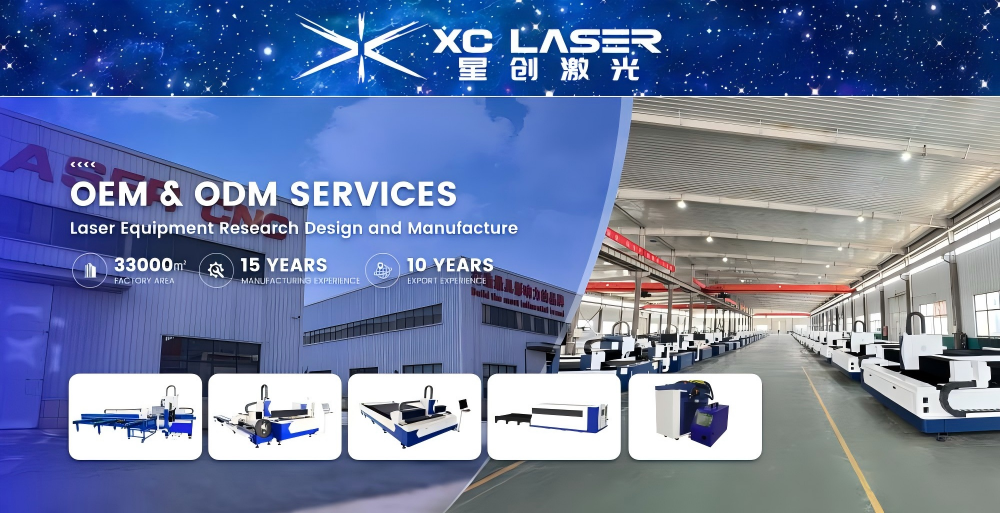 Welcome to Jinnan Xing Chuang Laser Equipment Co.,Ltd / XC - Laser .
 -
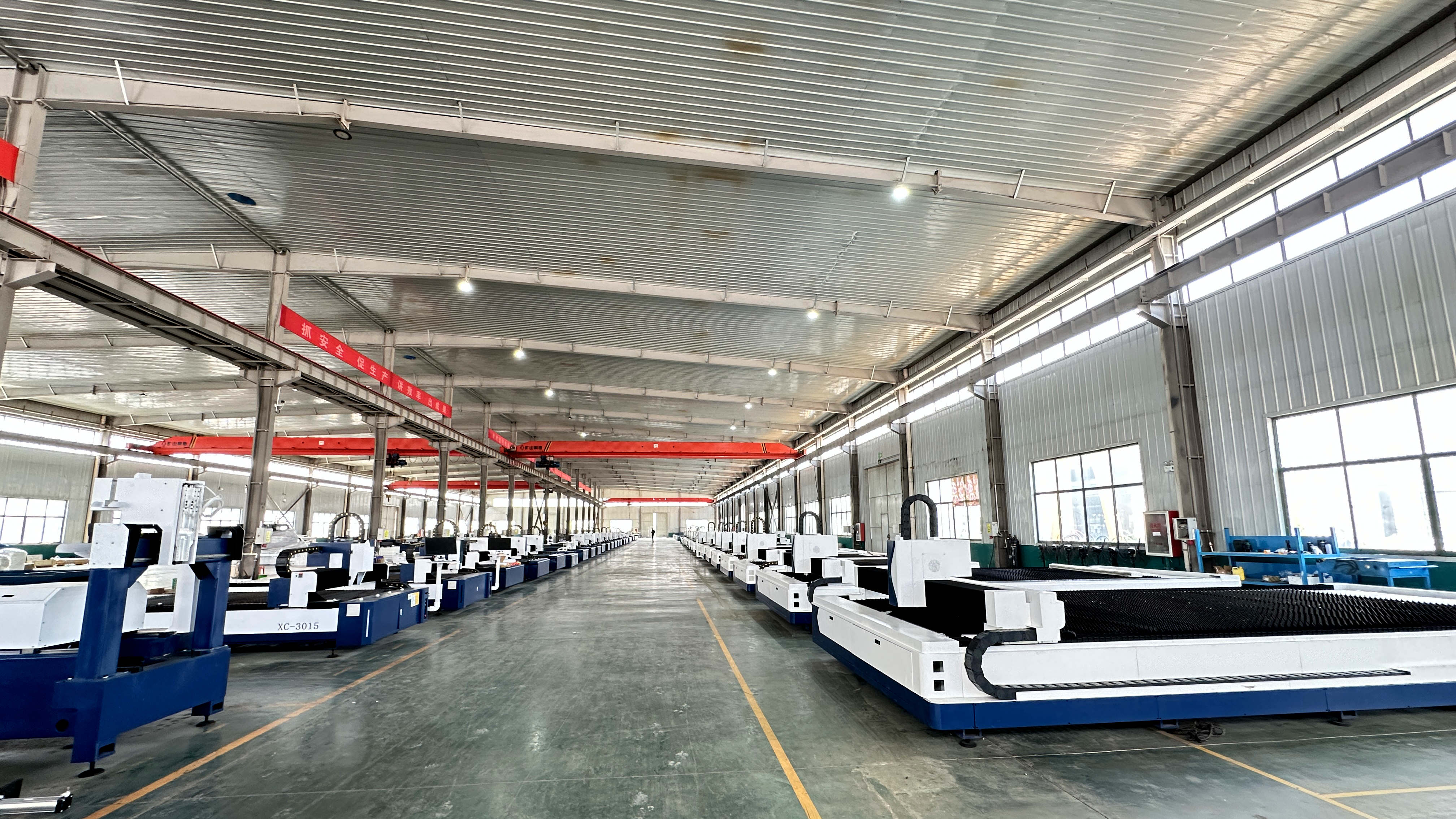 Real Photo of Our Laser Cutting Machine Workshop
 -
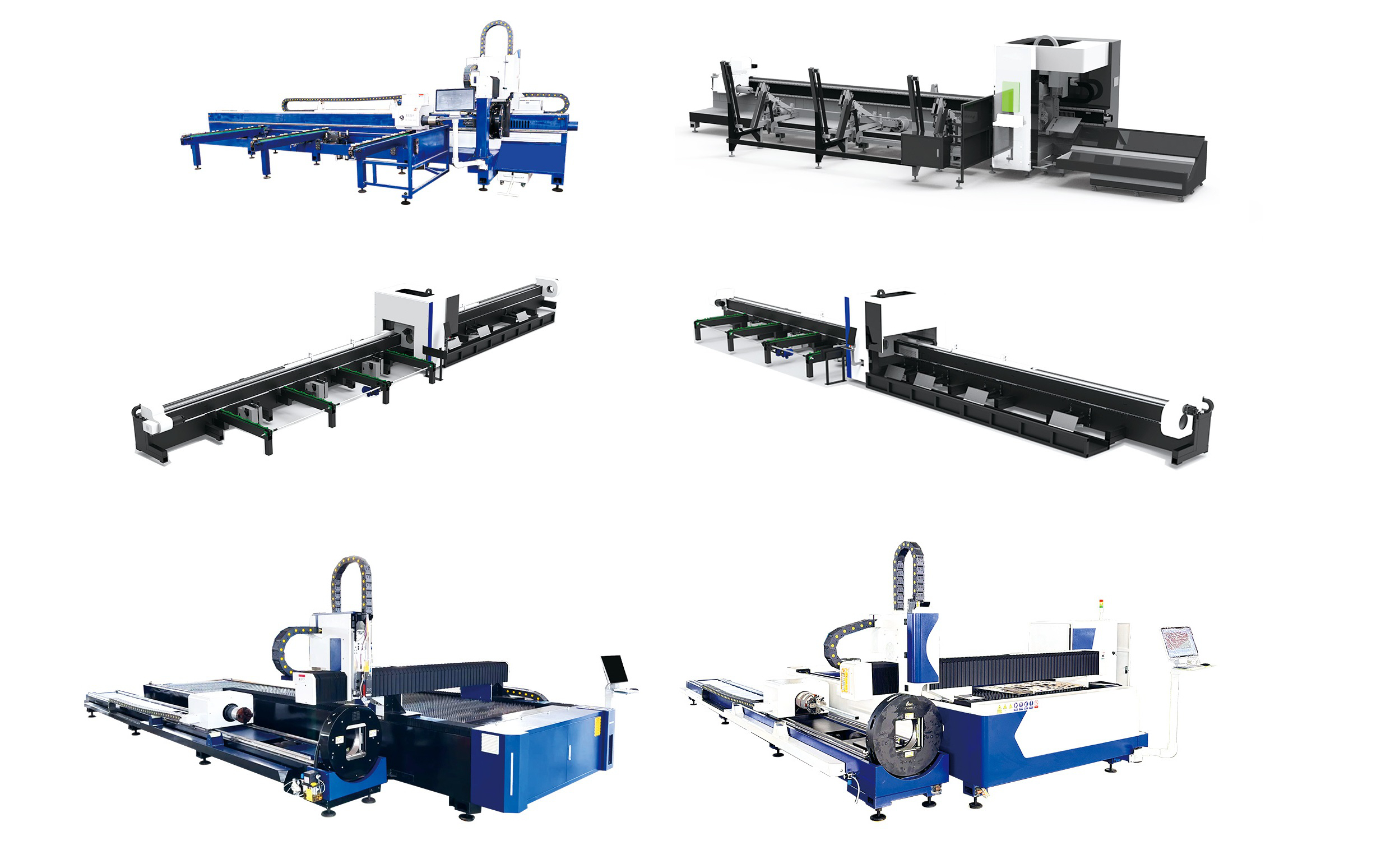 2 Chucks Tube Cutting Machine , 3 Chucks Tube Cutting Machine , Tube And Plate Integrated Laser Cutting Machine
 -
 Laser cutting machines are widely used in various industries such as metal processing, sheet metal manufacturing, and precision engineering, and their stable operation relies heavily on high-quality consumables. These consumables, though small in size, directly affect the cutting accuracy, efficienc


