

Blog Detail

In the rapidly evolving landscape of industrial cleaning, continuous laser cleaning machines have emerged as a transformative technology, replacing traditional high-pollution, low-efficiency cleaning methods with a non-contact, eco-friendly, and high-performance solution. Unlike pulsed laser cleaning machines that emit short bursts of energy, continuous wave (CW) laser cleaning systems deliver a steady, uninterrupted laser beam, making them particularly suitable for large-scale, high-volume industrial cleaning tasks. As global industries prioritize green manufacturing and operational efficiency, continuous laser cleaning machines are gaining widespread adoption across automotive, aerospace, shipbuilding, and many other sectors, driving a new era of surface treatment excellence.
Working Principle: How Continuous Laser Cleaning Machines Operate
The core working principle of continuous laser cleaning machines is based on selective photothermal interaction and laser ablation, leveraging the differential absorption of laser energy between contaminants and base materials. A high-energy density continuous laser beam is directed at the surface to be cleaned, where contaminants such as rust, paint, oil, and oxides absorb the laser energy at a much higher rate than the underlying substrate. This rapid energy absorption causes the contaminants to undergo instantaneous thermal decomposition, vaporization, or stripping, effectively separating them from the surface without damaging the base material.
The continuous laser generator provides a stable, uninterrupted energy output, ensuring consistent cleaning results across large areas. Key parameters such as laser power, beam quality, and width can be precisely adjusted to adapt to different contaminants and substrate types. For instance, high-power continuous lasers (1.5kW to 3kW) are ideal for removing thick rust and heavy coatings, while optimized beam quality (BPP ≤ 1.5mm·mrad) ensures uniform energy distribution, enhancing cleaning efficiency and quality. The non-contact nature of this process eliminates physical wear on the substrate, making it suitable for both durable metal surfaces and relatively delicate materials when parameters are properly tuned.
Core Advantages: Outperforming Traditional Cleaning Methods
Continuous laser cleaning machines offer a multitude of advantages over traditional cleaning techniques such as chemical cleaning, manual scrubbing, and abrasive blasting, positioning them as a preferred choice for modern industrial applications.
High Efficiency and Large-Scale Cleaning Capability: With a continuous laser beam, these machines achieve significantly faster cleaning speeds compared to pulsed counterparts and traditional methods. The maximum cleaning speed can reach up to 50m²/h, making them ideal for large-area surfaces such as ship hulls, railway tracks, and large metal structures. The steady energy output eliminates the need for repeated passes, reducing cleaning time by up to 70% and minimizing production downtime.
Non-Damaging to Substrates: Through precise adjustment of laser parameters (wavelength, power, and energy density), continuous laser cleaning targets only contaminants, leaving the base material intact. This non-contact mode avoids mechanical damage and thermal impact zones (HAZ) that are common with abrasive or chemical cleaning, making it suitable for sensitive components and high-value materials.
Environmental Friendliness and Cost-Effectiveness: Unlike chemical cleaning, continuous laser cleaning requires no chemical reagents or additional consumables, producing zero secondary pollution such as wastewater or chemical residues. It only consumes electricity, reducing long-term operational costs by eliminating expenses related to chemicals, abrasives, and waste disposal. Additionally, the core component (fiber laser) has a service life of over 100,000 hours, ensuring low maintenance costs and long-term reliability.
Easy Operation and Versatility: Modern continuous laser cleaning machines feature compact designs, with integrated laser generators, cleaning heads, control units, and cooling systems in a single cabinet for easy mobility (equipped with 4 silent universal wheels for 360° movement). Handheld models have lightweight cleaning guns (as low as 0.7kg), allowing even novice operators to use them easily. These machines support 11 languages, with user-friendly interfaces that enable convenient storage and retrieval of cleaning parameters, adapting to diverse user needs globally.
Scalability and Automation Compatibility: Continuous laser cleaning machines can be seamlessly integrated with industrial robots via reserved I/O interfaces, enabling automated cleaning workflows for high-volume production lines. This scalability makes them suitable for both small-batch precision cleaning and large-scale industrial production, enhancing operational flexibility.
Key Specifications and Product Types
Continuous laser cleaning machines are available in various configurations to meet different industrial needs, with key specifications varying by model. Common laser power ranges from 1.5kW to 3kW, with a cleaning gun fiber length of up to 15m, allowing flexible operation in large spaces or outdoor environments. The overall dimensions of standard models are typically around 650mm × 800mm × 1350mm, with a weight of approximately 150kg, balancing portability and stability.
Product types include standard continuous laser cleaning machines, portable handheld models, double wobble models, and luggage-type CW laser cleaners, catering to diverse application scenarios from indoor industrial workshops to outdoor field operations. The cleaning head is equipped with high-light-transmittance, large-depth-of-field lenses, ensuring stable operation under high-power conditions and adapting to different surface geometries.
Related Blogs
-
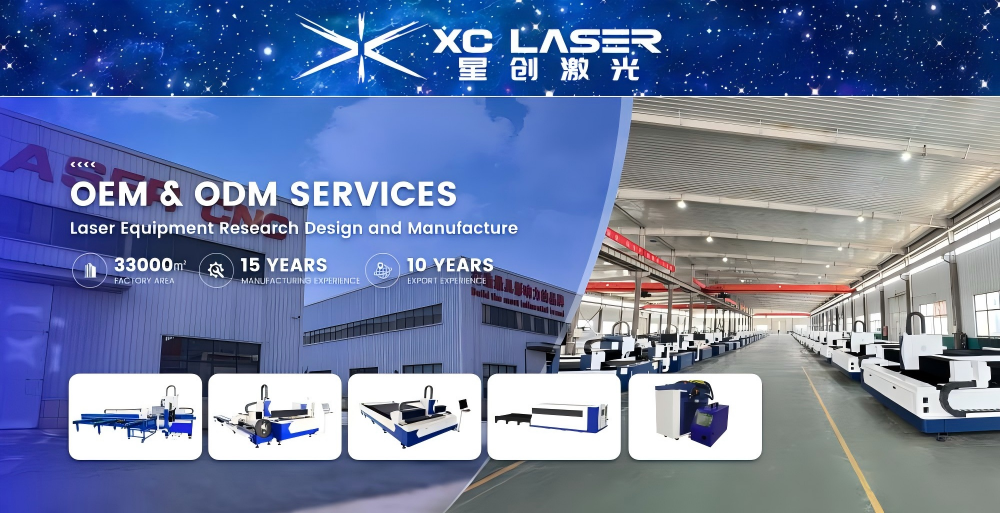 Welcome to Jinnan Xing Chuang Laser Equipment Co.,Ltd / XC - Laser .
 -
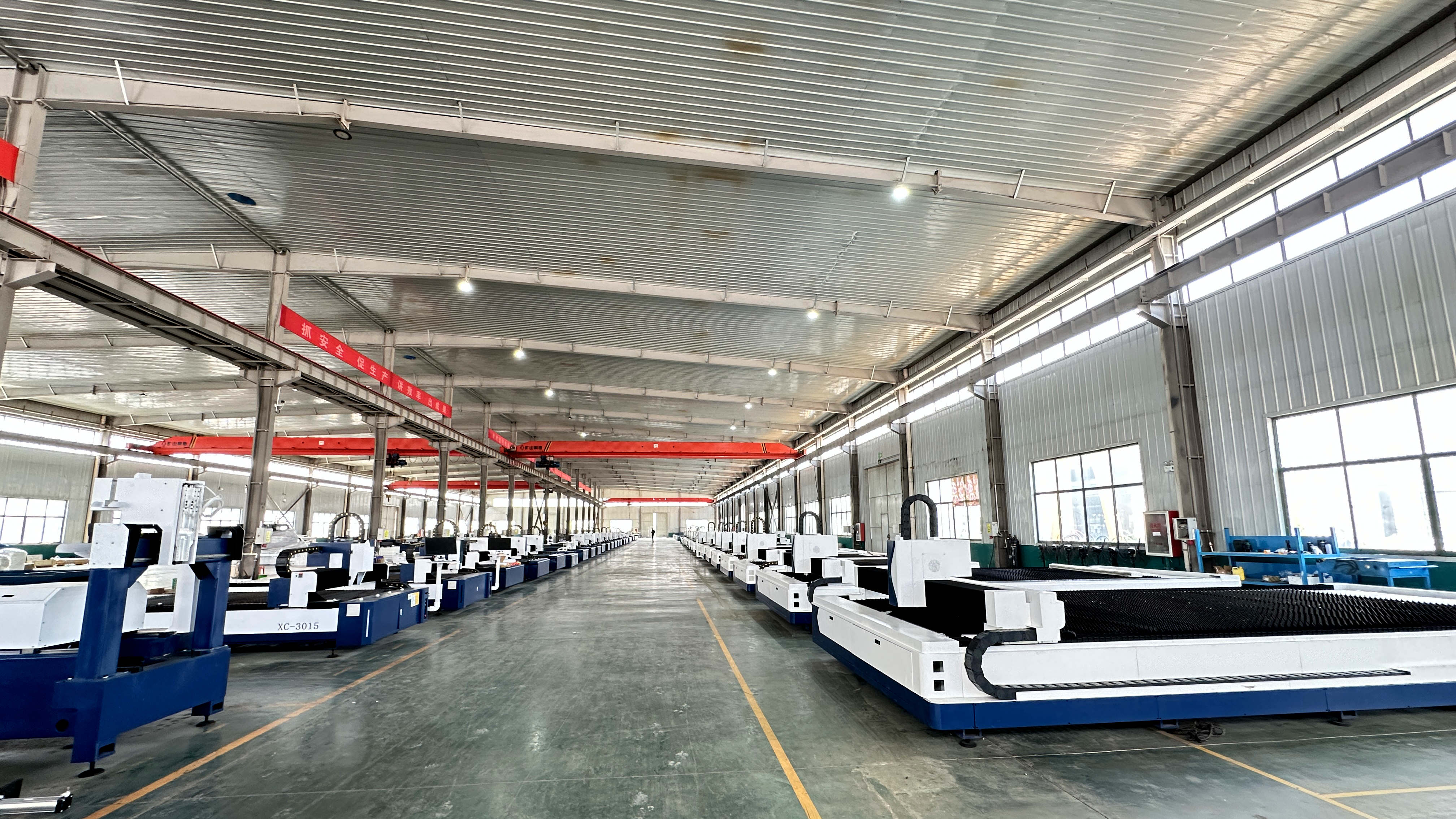 Real Photo of Our Laser Cutting Machine Workshop
 -
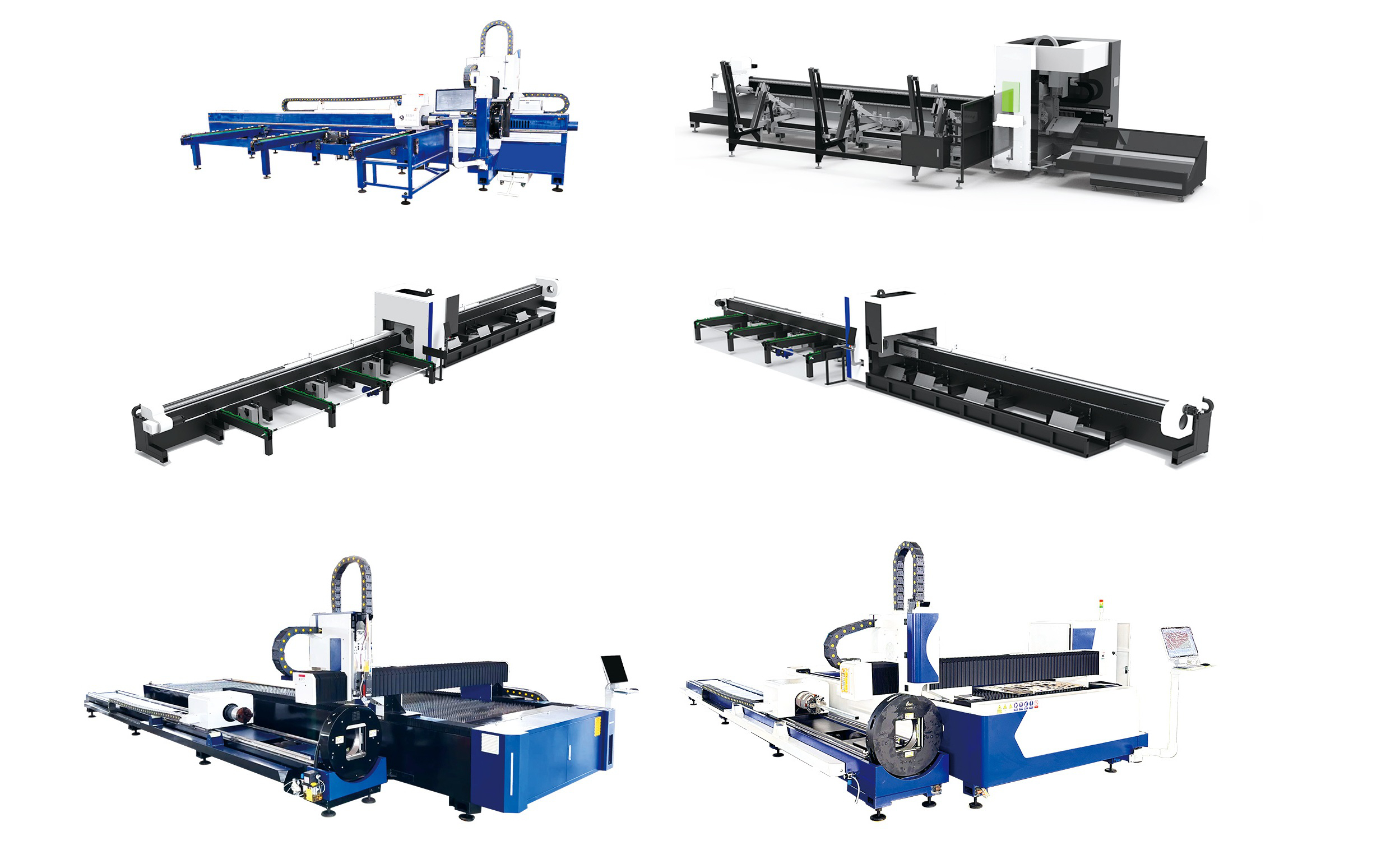 2 Chucks Tube Cutting Machine , 3 Chucks Tube Cutting Machine , Tube And Plate Integrated Laser Cutting Machine
 -
 Laser cutting machines are widely used in various industries such as metal processing, sheet metal manufacturing, and precision engineering, and their stable operation relies heavily on high-quality consumables. These consumables, though small in size, directly affect the cutting accuracy, efficienc


