

Blog Detail


The core of selecting a single-table fiber laser cutting machine lies in locking in the right model through five key steps: Material/Thickness → Power/Working Area → Bed/Transmission/Cutting Head → Control System/Accessories → Cost/After-sales Service.
Priority shall be given to matching the processing requirements of carbon steel/stainless steel/aluminum alloy – the most common materials in industrial equipment foreign trade, while balancing precision, efficiency and return on investment. Below is a directly actionable selection process and key points:
1. First Define Processing Requirements (Avoid Mismatch)
Material & Thickness
Single-table machines are mainly designed for cutting metal thin and medium plates, with carbon steel, stainless steel and aluminum as the mainstream materials. For high-reflective materials (copper/brass), a high-power configuration with anti-reflection function is required.
Reference power matching formula:
Carbon steel thickness (mm) ≈ Power (W) ÷ 1000 × 10
Example: 3000W for 12mm carbon steel, 1500W for 6mm carbon steel
For stainless steel and aluminum, the power needs to be increased by 10-20%.
Working Area & Efficiency
Select the worktable according to 80% of the order size:
The common 3015 model (3m×1.5m) is suitable for small and medium batch production;
4020/6025 models are for medium and large working areas.
Since single-table machines are not equipped with exchange tables, prioritize the dual-drive + rack and pinion transmission system to boost speed, with a synchronized speed ≥100m/min and acceleration ≥1G.
Precision Requirements
For general parts: Positioning accuracy ±0.05mm/m and repeat positioning accuracy ±0.03mm/m are sufficient;
For precision parts: A linear motor + grating ruler configuration is required, which can upgrade the precision to ±0.02mm/m.
If you want to know more about our machines or need any help , please send email to sales@xc-laser.com
XC-Laser . Mr Wang Dong
Related Blogs
-
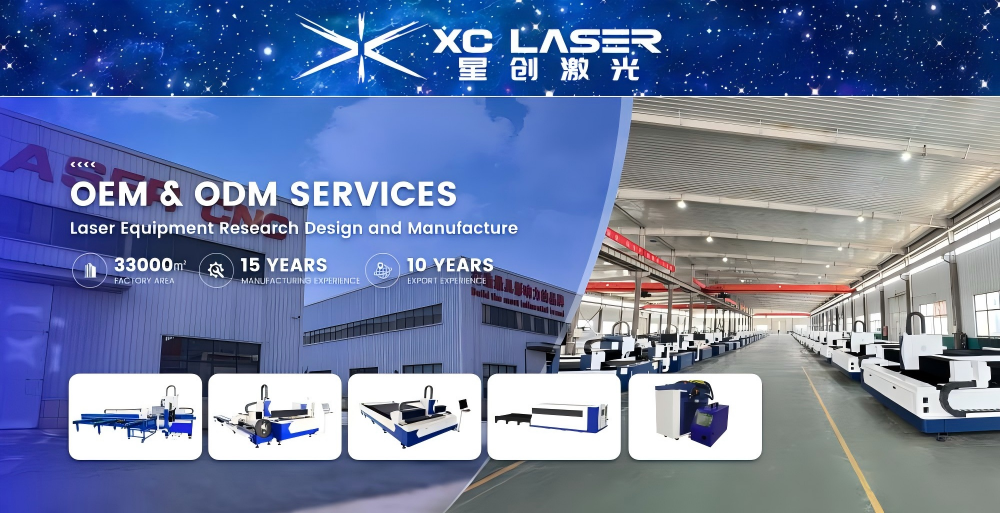 Welcome to Jinnan Xing Chuang Laser Equipment Co.,Ltd / XC - Laser .
 -
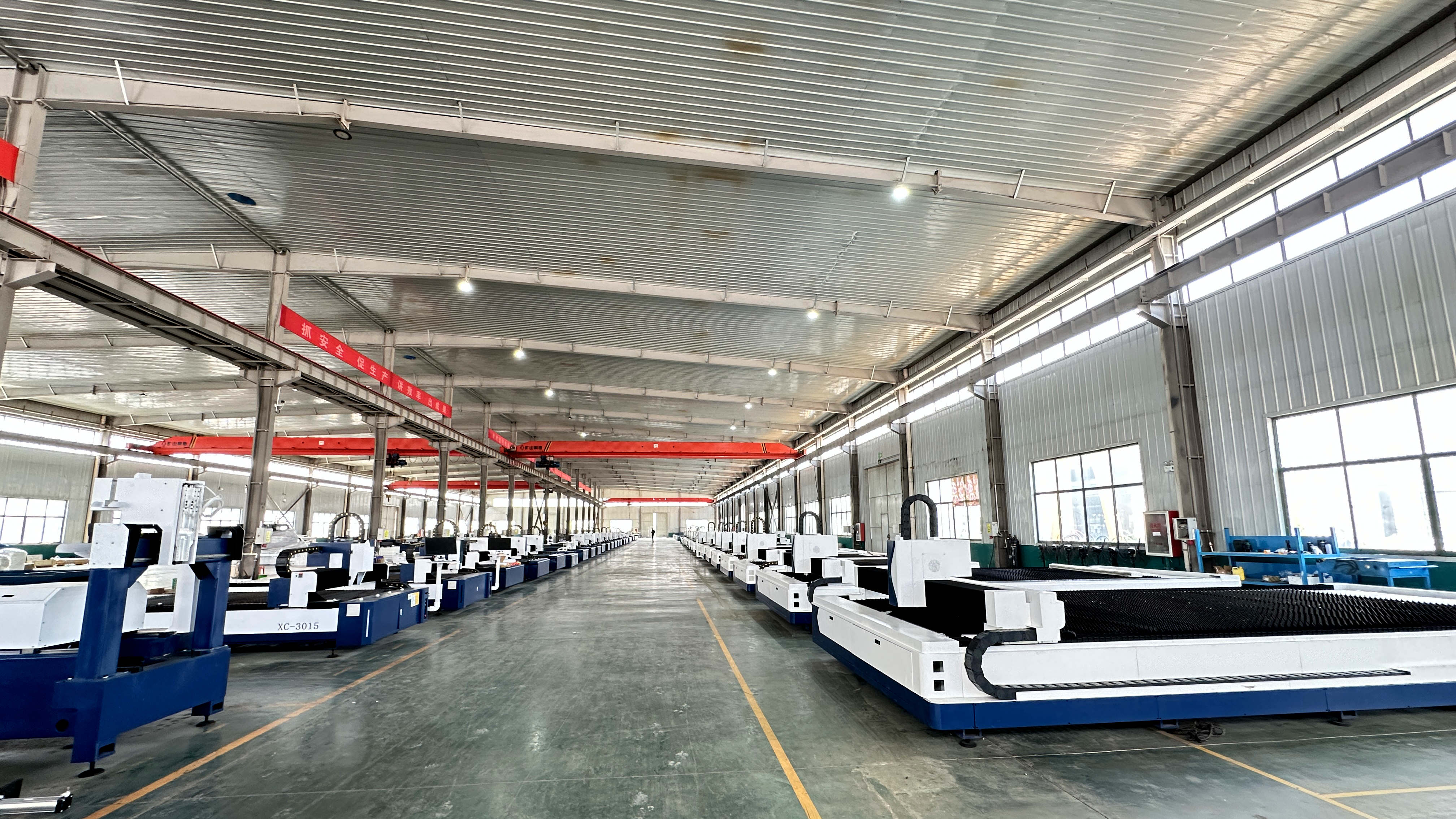 Real Photo of Our Laser Cutting Machine Workshop
 -
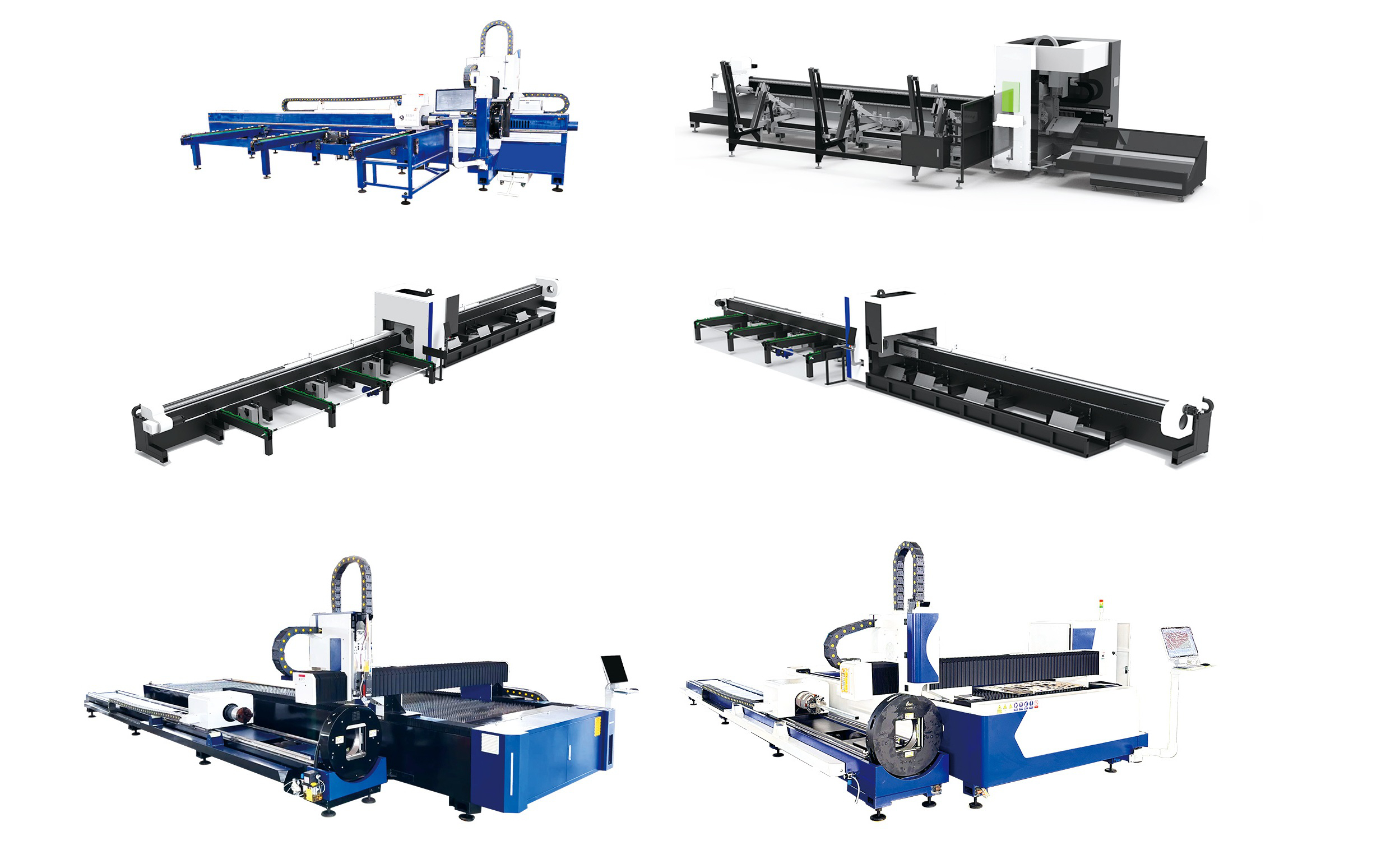 2 Chucks Tube Cutting Machine , 3 Chucks Tube Cutting Machine , Tube And Plate Integrated Laser Cutting Machine
 -
 Laser cutting machines are widely used in various industries such as metal processing, sheet metal manufacturing, and precision engineering, and their stable operation relies heavily on high-quality consumables. These consumables, though small in size, directly affect the cutting accuracy, efficienc


