

Blog Detail


In the era of green manufacturing and precision processing, laser cleaning machines have emerged as a revolutionary cleaning solution, gradually replacing traditional chemical and mechanical cleaning methods. Unlike conventional techniques that may cause damage to substrates or environmental pollution, laser cleaning achieves non-contact, pollution-free, and high-precision cleaning by utilizing the interaction between laser beams and surface contaminants. This technology has been widely applied in various industries due to its advantages of controllable cleaning effect, minimal thermal impact, and adaptability to different materials. Generally, laser cleaning machines can be classified into several main types based on their working principles and laser characteristics, each with unique features and application scenarios that cater to diverse industrial needs.
The first major type of laser cleaning machine is the pulsed laser cleaning machine, which is widely recognized for its high precision and minimal thermal damage. It works by emitting short-pulse lasers with high peak power, which impact the surface of the target object, vaporizing or peeling off contaminants without harming the substrate. The adjustable pulse width and frequency allow operators to optimize parameters for different cleaning tasks, making it ideal for fine cleaning of heat-sensitive materials such as aerospace components and precision electronic parts. Although it has higher manufacturing and maintenance costs and a relatively slower processing speed for large-area tasks, its ability to handle hard-to-remove coatings and pollutants makes it indispensable in high-precision fields. Common laser sources for this type include fiber lasers, which are widely used due to their ability to transmit through optical fibers and adapt to industrial applications.
Continuous laser cleaning machines constitute another core type, distinguished by their high efficiency and cost-effectiveness. Different from pulsed ones, they emit a continuous laser beam, which exerts constant laser energy on the object surface to achieve cleaning effects. This type excels in large-area cleaning tasks with its fast processing speed and is more affordable in terms of production and maintenance costs, making it suitable for scenarios with high tolerance for thermal impact zones. It is also easy to operate and integrate into automated production lines, widely used in removing rust from large metal structures, cleaning tire molds, and clearing welding residues on automotive parts. However, its relatively low peak power and large thermal impact zone limit its application in cleaning heat-sensitive materials.
Beyond the two main types, laser cleaning machines can also be categorized into dry laser cleaning and wet laser cleaning based on cleaning methods, further expanding their application scope. Dry laser cleaning directly irradiates the workpiece surface with laser beams to remove particles and films, which is the most widely used method currently. Wet laser cleaning, also known as laser steam cleaning, involves applying a thin liquid film on the substrate surface; the laser irradiation causes the liquid film to vaporize explosively, generating impact force to remove contaminants. This technology is particularly useful in improving cleaning efficiency for certain stubborn pollutants, though it requires careful control of the liquid film thickness to avoid secondary pollution. Together, these types cover a wide range of applications, from aerospace and automotive manufacturing to cultural heritage restoration and electronic industry.
In summary, laser cleaning machines, with their diverse types and superior performance, have become an essential part of modern industrial production and cultural protection. Pulsed laser cleaning machines meet the demand for high-precision and heat-sensitive material cleaning, while continuous laser cleaning machines excel in large-area, high-efficiency tasks, and dry/wet cleaning methods complement each other to adapt to different scenarios. Compared with traditional cleaning methods, laser cleaning is greener, more precise, and more flexible, solving many problems that conventional techniques cannot address. As laser technology continues to advance, the types of laser cleaning machines will become more diversified, and their applications will further expand into emerging fields such as new energy and rail transit, contributing more to the development of green and intelligent manufacturing.
If you want to know more about our machines or need any help , please send email to sales@xc-laser.com
XC-Laser . Mr.Tom Song
Related Blogs
-
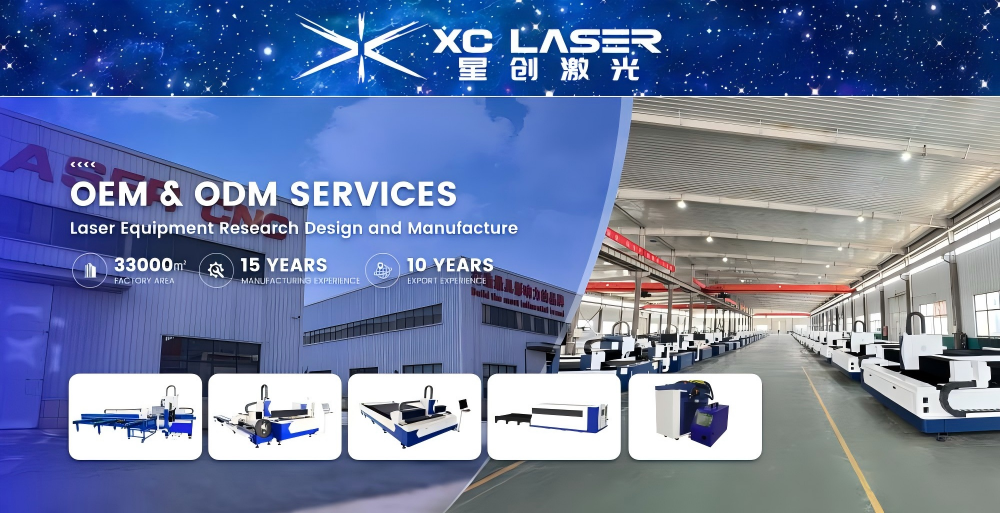 Welcome to Jinnan Xing Chuang Laser Equipment Co.,Ltd / XC - Laser .
 -
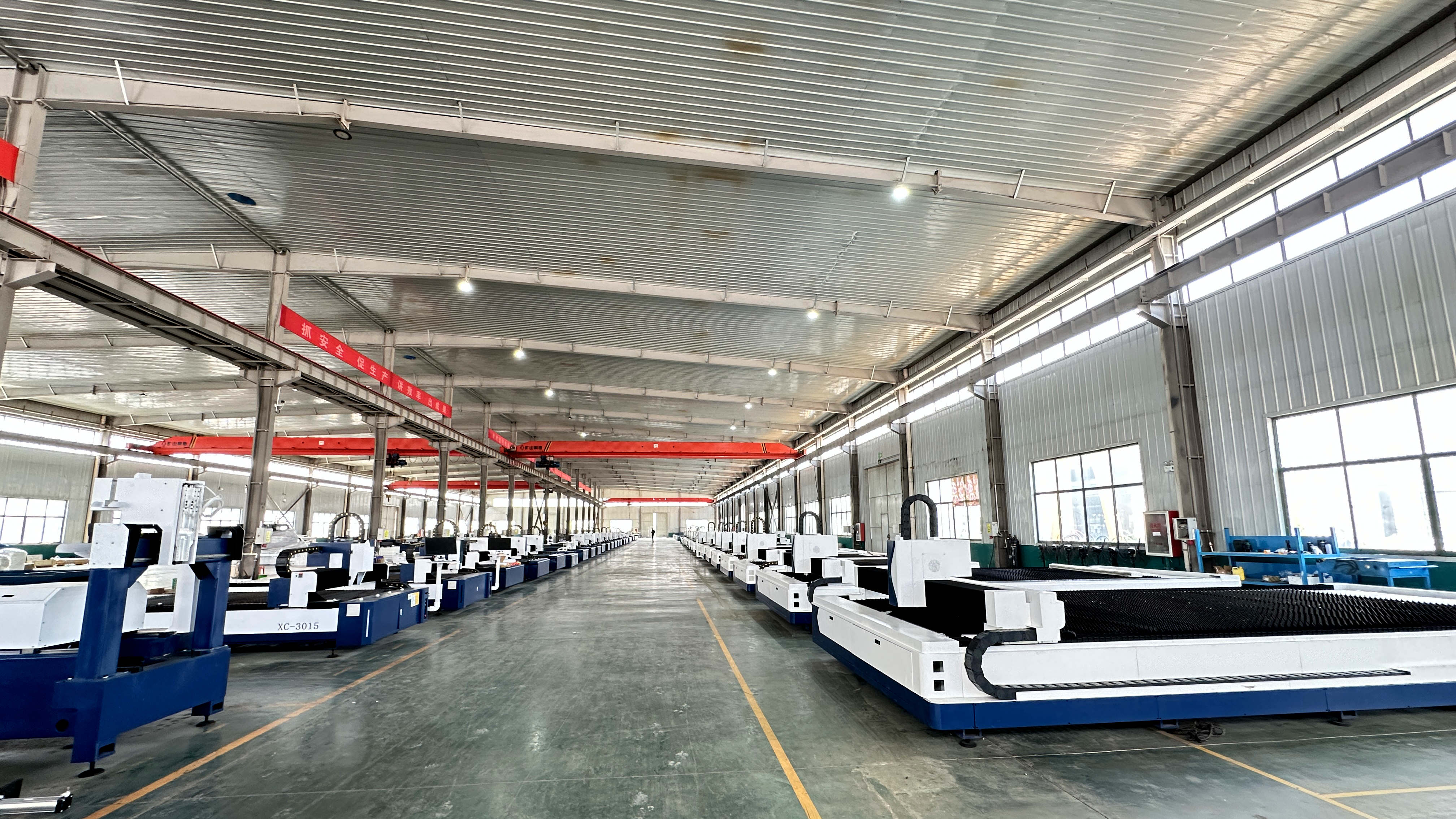 Real Photo of Our Laser Cutting Machine Workshop
 -
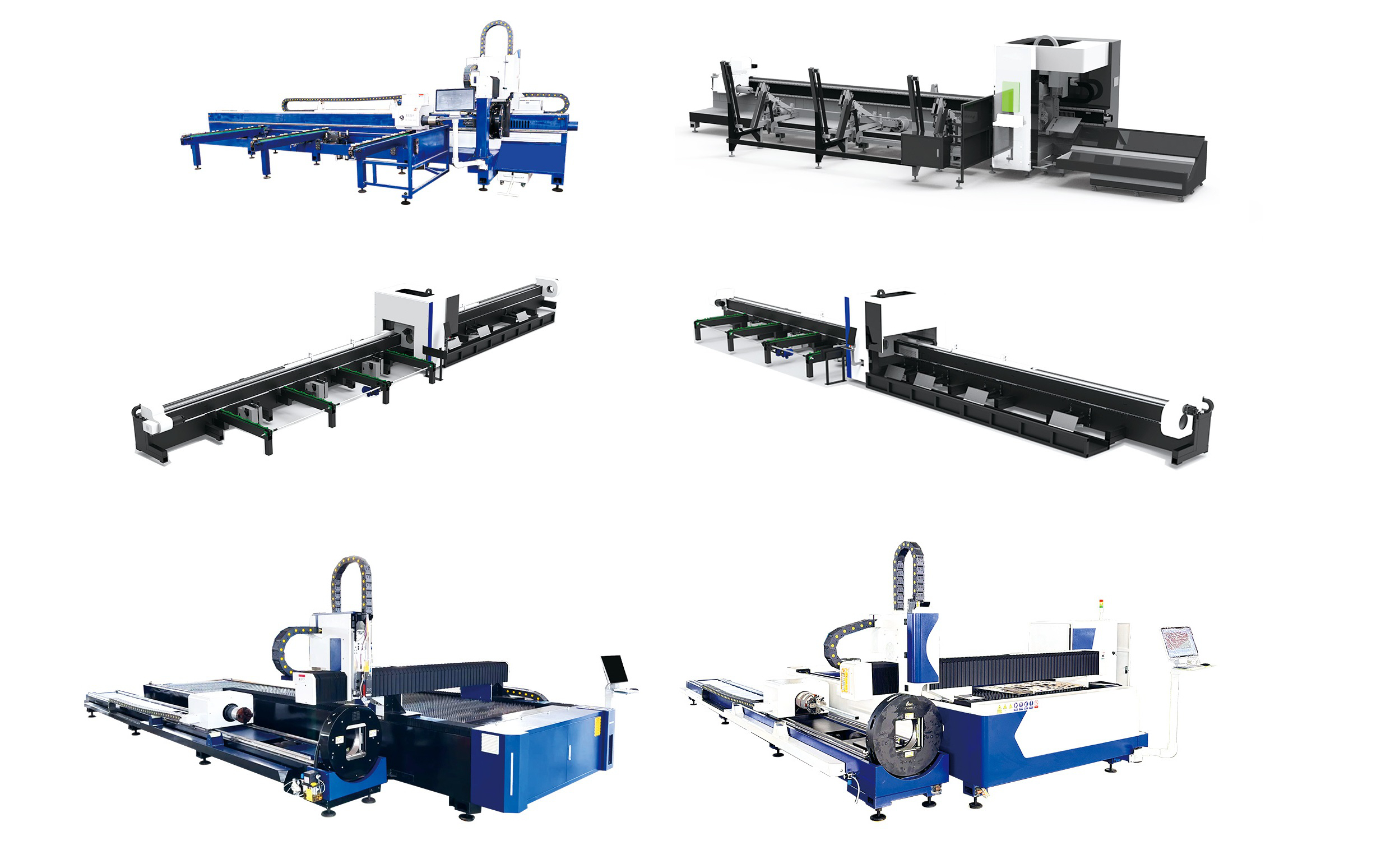 2 Chucks Tube Cutting Machine , 3 Chucks Tube Cutting Machine , Tube And Plate Integrated Laser Cutting Machine
 -
 Laser cutting machines are widely used in various industries such as metal processing, sheet metal manufacturing, and precision engineering, and their stable operation relies heavily on high-quality consumables. These consumables, though small in size, directly affect the cutting accuracy, efficienc


